From Footballers to Media Companies
How Social Media Redefined the Value of the Modern Footballer
By Kiril Yurukov · · 5 min read
Abstract
Over the past two decades, footballers have evolved from athletes competing primarily on the pitch into global media brands operating across multiple digital platforms. Instagram, X, TikTok and YouTube have fundamentally changed the relationship between players, clubs, sponsors and supporters. Today, a player’s influence is measured not only by goals, assists or trophies, but also by followers, engagement and digital reach. This transformation has created a new economic reality in which attention has become a strategic asset and social media presence is increasingly considered alongside sporting performance.
This article examines how digital platforms have reshaped football, why online influence now carries significant commercial value, and why the modern footballer increasingly resembles a media company rather than simply a professional athlete.
1. The Rise of the Footballer Brand
Not long ago, supporters primarily followed clubs. They read newspapers, watched television interviews and waited for official club announcements. Players appeared in the media only occasionally, usually through post-match interviews or carefully managed press conferences. Social media completely changed this relationship.
Platforms such as Instagram, X, TikTok and YouTube have allowed footballers to communicate directly with hundreds of millions of supporters without relying on clubs or traditional media. Every training session, holiday, sponsorship campaign and personal milestone can now be shared instantly with a global audience. The result is a shift in loyalty and attention.
For millions of supporters, following a favourite player has become as important as following the club itself. When stars change clubs, many fans simply move with them, taking their attention and often their purchasing power with them.
This trend is particularly visible among younger audiences, who increasingly consume football through personalities rather than institutions. According to FIFA and Deloitte’s analysis of changing fan behaviour, digital-first audiences engage with players as creators, entertainers and influencers alongside their sporting identities.
Footballers are no longer simply athletes, they are personal brands with global distribution channels.
2. Attention Equals Money
In today’s football economy, attention has become a measurable asset. Every new follower increases a player’s commercial reach, making them more valuable not only to sponsors but also to clubs seeking global visibility.
The 2026 FIFA World Cup offered another clear demonstration of this phenomenon. During the tournament, players experienced extraordinary growth across Instagram. Among the biggest reported increases were:
Erling Haaland: +32.1 million followers
Vozinha: +29.4 million followers
Jude Bellingham: +12 million
Cristiano Ronaldo: +11.4 million
Lamine Yamal: +11 million
Neymar: +7.7 million
Lionel Messi: +7.5 million
These numbers illustrate something important, the tournament did not simply create sporting winners, it created digital winners.
For brands, those additional followers represent millions of potential consumers. Greater reach translates into greater visibility for sponsored content, higher engagement and stronger negotiating power in commercial partnerships.
Industry studies by Nielsen Sports consistently show that athletes with large and highly engaged digital audiences deliver significantly greater value to commercial partners because they provide direct access to global consumers beyond traditional advertising channels. Today, endorsement income often extends far beyond boot deals.
Top footballers increasingly generate revenue through:
global sponsorship agreements
luxury fashion partnerships
technology campaigns
personal product lines
investment portfolios
equity partnerships
paid digital collaborations
For the world’s biggest stars, a single sponsored social media post can generate income exceeding what many people earn in an entire year. Attention has become currency.
3. Influence Beyond Football
The impact of social media extends well beyond personal income. Digital influence now affects the business of football itself.
When Cristiano Ronaldo joined Juventus in 2018, the club reportedly sold hundreds of thousands of shirts within days. While shirt sponsorship agreements mean clubs do not receive the full retail value of every sale, the commercial impact extended far beyond merchandise. Juventus experienced substantial growth in global digital engagement, sponsorship exposure and international visibility. The same pattern has followed major transfers involving Lionel Messi, Neymar and Kylian Mbappé.
Players today influence:
shirt sales
sponsorship activation
broadcast interest
international fan growth
tourism
commercial partnerships
Consequently, clubs increasingly evaluate digital influence alongside sporting performance. A player with exceptional global reach offers value beyond ninety minutes on the pitch.
They become a marketing asset capable of attracting sponsors, expanding international audiences and strengthening commercial negotiations.
Football executives increasingly recognise that modern recruitment involves two interconnected questions:
Can the player improve the team?
Can the player grow the club?
4. When Reputation Becomes Risk
The same platforms that create value can also destroy it. Unlike traditional media, social media allows players to communicate instantly with millions of people. This creates opportunity, it also creates risk.
A single post can trigger:
public controversy
sponsor concerns
disciplinary action
political debate
reputational damage
Players increasingly face scrutiny over:
political statements
inappropriate online behaviour
luxury lifestyle content
leaked information
reactions after defeats
conflicts with supporters
interactions with referees or opponents
Online abuse has also become one of football’s most significant challenges.
FIFA’s Social Media Protection Service, introduced during major international tournaments, has demonstrated the scale of abusive content directed at players and officials, highlighting the growing need for digital safeguarding.
In the digital era, reputation travels as quickly as performance. A player’s market value is increasingly influenced by both.
5. Footballers as Media Companies
Perhaps the biggest transformation is organizational rather than technological. Many elite footballers no longer manage their social media alone.
Instead, they work with PR consultants, brand managers, photographers, videographers, graphic designers, commercial agencies, legal advisors and marketing specialists
Content is planned.
Campaigns are scheduled.
Partnerships are coordinated.
Audience analytics are monitored.
Personal brands are managed with the same professionalism as multinational companies.
The footballer has become the CEO of a personal media business.
Their social platforms are no longer simply communication tools.
They are commercial assets generating measurable economic value.
6. The Future of Digital Influence
Artificial intelligence, personalized content, immersive media and creator-driven platforms are likely to deepen this transformation.
Supporters increasingly expect direct access to players rather than filtered communication through clubs. Brands increasingly prefer partnerships with individuals who command loyal digital communities. Meanwhile, clubs continue investing in digital strategy because player visibility directly strengthens their own commercial ecosystem.
The relationship is becoming increasingly symbiotic:
Players build audiences
Clubs amplify them
Sponsors monetize them
Supporters sustain them
Conclusion
Football has entered an era where influence extends far beyond the pitch.
The modern footballer is no longer defined solely by goals, assists or trophies. They operate as athletes, entertainers, entrepreneurs and media brands simultaneously. Social media has transformed attention into an economic asset, making digital influence an increasingly important component of a player’s overall value.
Performance still builds reputation, but reputation now scales through algorithms.
In modern football, players are no longer just competing for trophies. They are competing for attention, influence and relevance.
And increasingly, their digital profile may become almost as valuable as their performances on the pitch.
References
FIFA, Digital Engagement & Fan Experience Reports
Deloitte Football Money League (Commercial Revenue Analysis)
Nielsen Sports, Athlete Influence and Sponsorship Research
UEFA, The European Club Finance and Investment Landscape
PwC Sports Survey, The Future of Sports Media
FIFA Social Media Protection Service reports (2022–2026)
Statista, Social media usage and athlete following trends
SportsPro Media, Athlete branding and digital sponsorship analysis
Related Stories
Norway’s Quiet Sporting Revolution: The System That Put Joy Before Results
When Norway’s World Cup run finally ended against England in the quarter-finals, the disappointment was real, but so was the sense that something much larger had happened. A country of roughly 5.6 million people had returned to the tournament after a 28-year absence, eliminated Brazil for the first time in a World Cup knockout match and shown that its best generation was no longer satisfied merely
· 6 min read
The Future of Football
Football has entered one of the most significant periods of transformation in its history. While previous revolutions were driven by tactical innovation, professionalism, television, and commercialization, the next evolution is being powered by technology, data, and artificial intelligence.
· 5 min read
Jimmy Hill: The Man Who Broke Football's Wage Ceiling
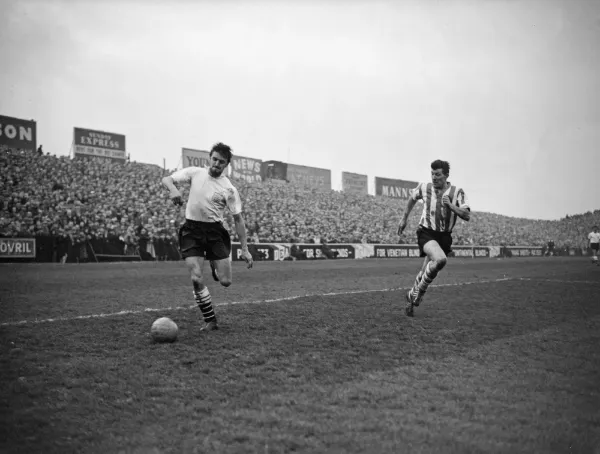
In modern football, players earning hundreds of thousands of pounds a week are part of an industry generating billions through broadcasting, sponsorships and commercial partnerships. Their salaries dominate headlines, influence transfer negotiations and shape the financial strategies of the world's biggest clubs.
· 6 min read