
Jimmy Hill: The Man Who Broke Football's Wage Ceiling
FBTG | The People Behind Football | Episode 01
By Kiril Yurukov · · 6 min read
Abstract
In modern football, players earning hundreds of thousands of pounds a week are part of an industry generating billions through broadcasting, sponsorships and commercial partnerships. Their salaries dominate headlines, influence transfer negotiations and shape the financial strategies of the world's biggest clubs.
Yet just over six decades ago, even England's finest footballers were prevented from earning more than £20 a week during the season, regardless of their ability, popularity or the revenue they helped generate.
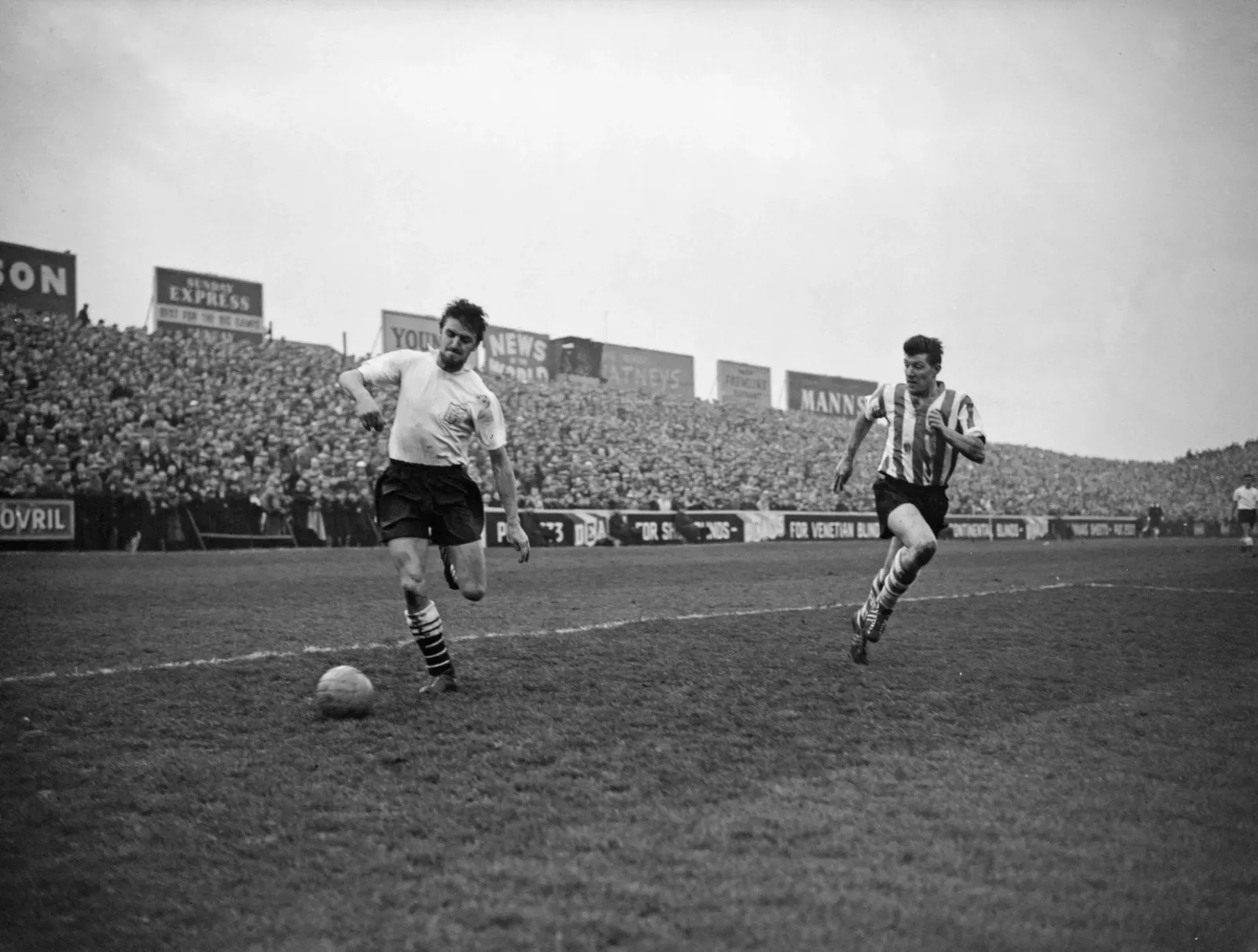
That system came to an end in January 1961, following a campaign led by Jimmy Hill, a Fulham midfielder who understood that football's growing commercial value was not being fairly reflected in the wages of those playing the game.
Hill never became one of English football's greatest players, but his work away from the pitch helped transform the relationship between footballers, clubs and the institutions governing the sport.
When Footballers Had a Price Ceiling
For much of the twentieth century, English professional football operated under a maximum wage system that restricted how much clubs could pay their players.
The policy was intended partly to control costs and prevent wealthier clubs from using their financial resources to dominate the transfer market. In practice, however, it also limited the bargaining power of footballers, even as clubs attracted large crowds and generated substantial matchday revenue.
By 1960, the maximum weekly wage during the playing season stood at £20, with a lower limit during the summer. A star attracting tens of thousands of spectators could therefore receive the same basic salary as a far less commercially valuable player.
The restrictions were reinforced by the retain-and-transfer system, which allowed clubs to retain control over a player's registration even after his contract had expired, significantly limiting his ability to negotiate with another employer.
Footballers were professional entertainers operating in an increasingly popular industry, yet they lacked freedoms that workers in many other occupations could exercise.
For Hill, this imbalance was becoming impossible to justify.
A Footballer Who Became a Union Leader
Born in London in 1928, Jimmy Hill began his professional career with Brentford before joining Fulham in 1952, where he played alongside several of England's leading footballers.
His influence would ultimately extend far beyond his performances on the pitch.
Hill became chairman of the Professional Footballers' Association in 1957, emerging as a determined advocate for players' rights at a time when football's authorities remained resistant to significant changes in employment conditions.
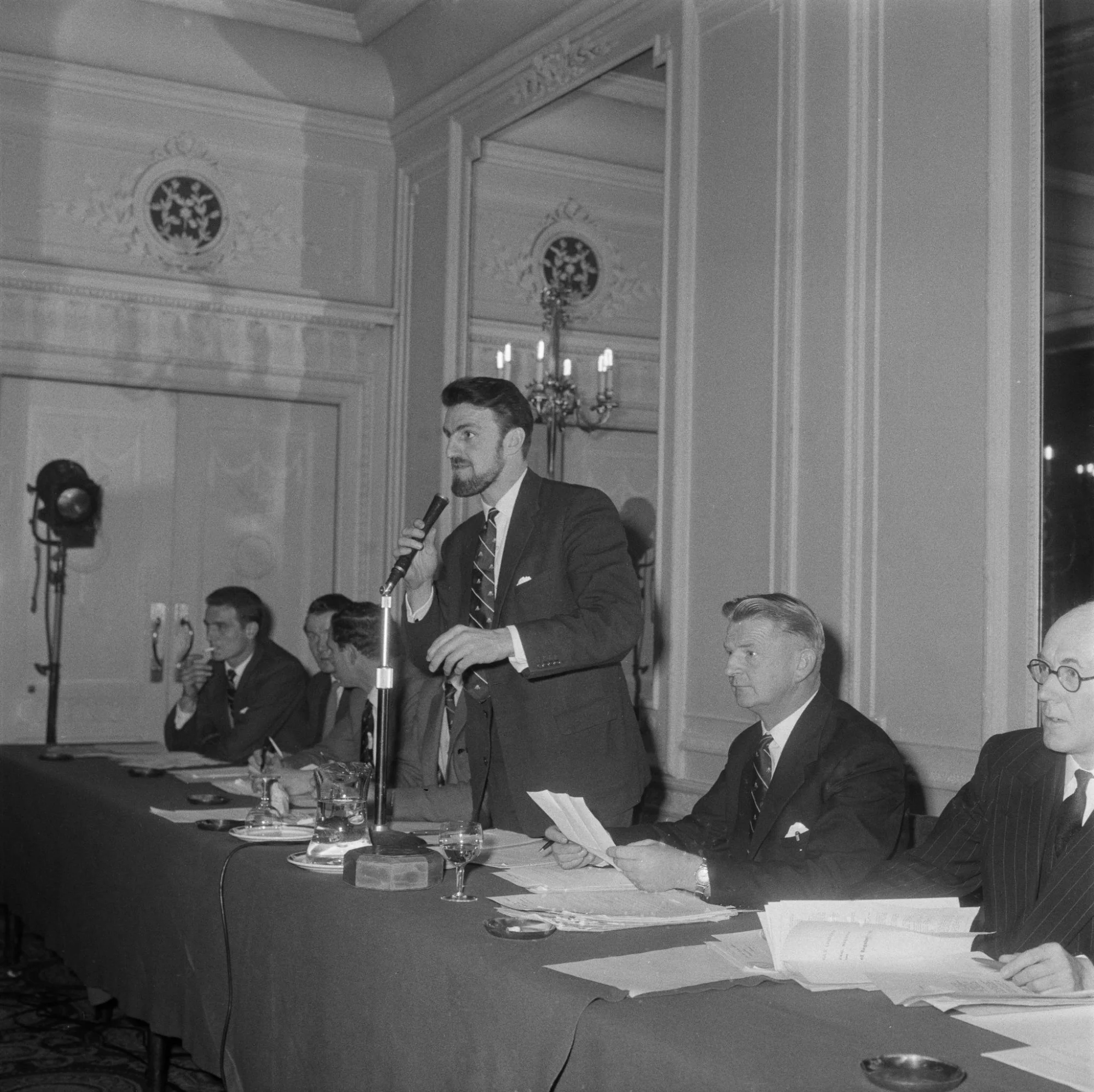
Rather than accepting the existing system, he worked to strengthen the union, organise its members and build public support for removing the wage ceiling.
His argument was not that every footballer should receive an enormous salary, but that players and clubs should be free to negotiate wages reflecting individual ability, market demand and the financial circumstances of their employers.
It was a fundamental challenge to a system in which the game's governing institutions determined the upper limit of a footballer's earnings.
The Strike That Never Happened
By the end of 1960, negotiations between the players' union and football's authorities had reached a critical stage.
Hill helped organise a vote in favour of industrial action, with PFA members overwhelmingly supporting the possibility of a strike if the maximum wage remained in place.
The prospect of professional footballers refusing to play represented a serious threat to the Football League, particularly at a time when clubs depended heavily on supporters attending matches.
Hill understood the importance of collective action. Individual players had limited negotiating power, but a coordinated movement involving hundreds of professionals could force the authorities to reconsider rules that had survived for generations.
On 18 January 1961, just days before the proposed strike, an agreement was reached to abolish the maximum wage. The threatened walkout never took place, but its impact was immediate.
For the first time, English Football League clubs could negotiate salaries without an externally imposed maximum, opening the door to a fundamentally different employment market.
From £20 to £100 a Week
The most visible symbol of the change came from Hill's own club, Fulham.
Johnny Haynes, the England international and one of the country's most admired players, became the first English footballer to earn £100 a week.
His new salary was five times the previous maximum, an extraordinary increase that captured the attention of supporters, newspapers and club directors across the country.
For some observers, the figure seemed excessive. For others, it represented a long-overdue recognition that footballers were central to an entertainment business whose revenues depended on their performances. The implications extended well beyond Haynes.
Clubs could now compete more freely for talent through salaries, while players gained an opportunity to negotiate contracts based on their sporting and commercial value.
The change also created new financial pressures, particularly for smaller clubs unable to match the resources of wealthier competitors.
Removing the wage ceiling therefore increased individual freedom without eliminating the economic inequalities already present in English football.
It changed the rules of negotiation, not the financial realities of the market.
A Revolution That Was Only Partly Complete
Although Hill's campaign ended the maximum wage, footballers did not immediately gain complete control over their careers.
The retain-and-transfer system remained a major restriction, allowing clubs to exercise considerable influence over players seeking to move elsewhere.
Further progress followed through the legal challenge brought by George Eastham, supported by the PFA, which led to a landmark High Court judgment in 1963 against aspects of the existing transfer arrangements.
Decades later, the 1995 Bosman ruling would deliver another major shift in contractual freedom, particularly for players moving between clubs in different European Union countries after their contracts expired.
These developments were separate legal and institutional milestones, but they belonged to a longer transformation in which footballers gradually gained greater control over their employment.
Hill's victory in 1961 was one of the earliest and most important breakthroughs in that process.
More Than a Players' Representative
Hill's contribution to football did not end with his work at the PFA.
After retiring as a player, he became manager of Coventry City in 1961 and helped transform the club's identity, introducing the Sky Blues branding and embracing new approaches to marketing, entertainment and supporter engagement.
Coventry rose from the Third Division to the First Division during his managerial tenure, demonstrating that Hill's ambitions extended beyond contractual reform into the wider organisation and presentation of football.
He later became one of British television's most recognisable football personalities, working as a presenter and analyst and helping popularise the studio discussion format that became a standard part of modern sports broadcasting.
Across these roles, Hill repeatedly recognised opportunities to challenge established conventions, whether in employment rights, club management or the way football was presented to audiences.
His career reflected an unusually broad understanding of football as both a sport and an evolving business.
The Man Who Changed the Balance of Power
The abolition of the maximum wage did not create the enormous salaries associated with modern football overnight. Those emerged through decades of growing broadcasting income, commercial expansion, international competition and changing transfer regulations.
What Hill achieved was more fundamental. He helped establish the principle that footballers should be able to negotiate their earnings rather than accept a ceiling imposed by the authorities.
For clubs, this meant accepting a new relationship with their most important employees, one in which retaining and attracting talent increasingly required financial negotiation rather than reliance on institutional restrictions.
For players, it marked an important step towards professional independence.
And for the wider football industry, it helped accelerate the transition from a tightly controlled employment system towards a market in which talent, revenue and bargaining power became increasingly connected.
Jimmy Hill is often remembered for his television career, his distinctive appearance and his outspoken personality. Yet his most enduring contribution came years before he became a familiar face on television.
In January 1961, he helped change who had the right to determine the value of a professional footballer.
The modern football economy was built through many decisions, but few challenged its foundations as directly as the campaign led by a Fulham midfielder who believed players deserved a greater say in their own futures.
Related Stories

Estadio Centenario: The Stadium Where the World Cup Was Born
On 30 July 1930, thousands of spectators gathered inside a newly constructed stadium in Montevideo to witness an event that would eventually become one of the most important occasions in international sport. Uruguay faced Argentina in the final of the first FIFA World Cup, with the hosts recovering from a half-time deficit to win 4-2 and become football’s inaugural world champions.
· 8 min read
1992: The Birth of the Premier League and the Business That Changed Football
On 15 August 1992, English football entered a new era. Twenty-two clubs began competing in the inaugural Premier League season, launching a competition that would eventually become the most commercially powerful domestic football league in the world.
· 7 min read
El Molinón: Spain’s Oldest Football Ground and the City That Never Left It
Long before the Santiago Bernabéu became a global football landmark and Camp Nou emerged as one of Europe’s most recognisable stadiums, football was already being played on a modest field beside a river in the northern Spanish city of Gijón.
· 6 min read