1973: The Shirt That Changed Football Sponsorship
FBTG | The Money Behind Football | Episode 01
By Kiril Yurukov · · 7 min read
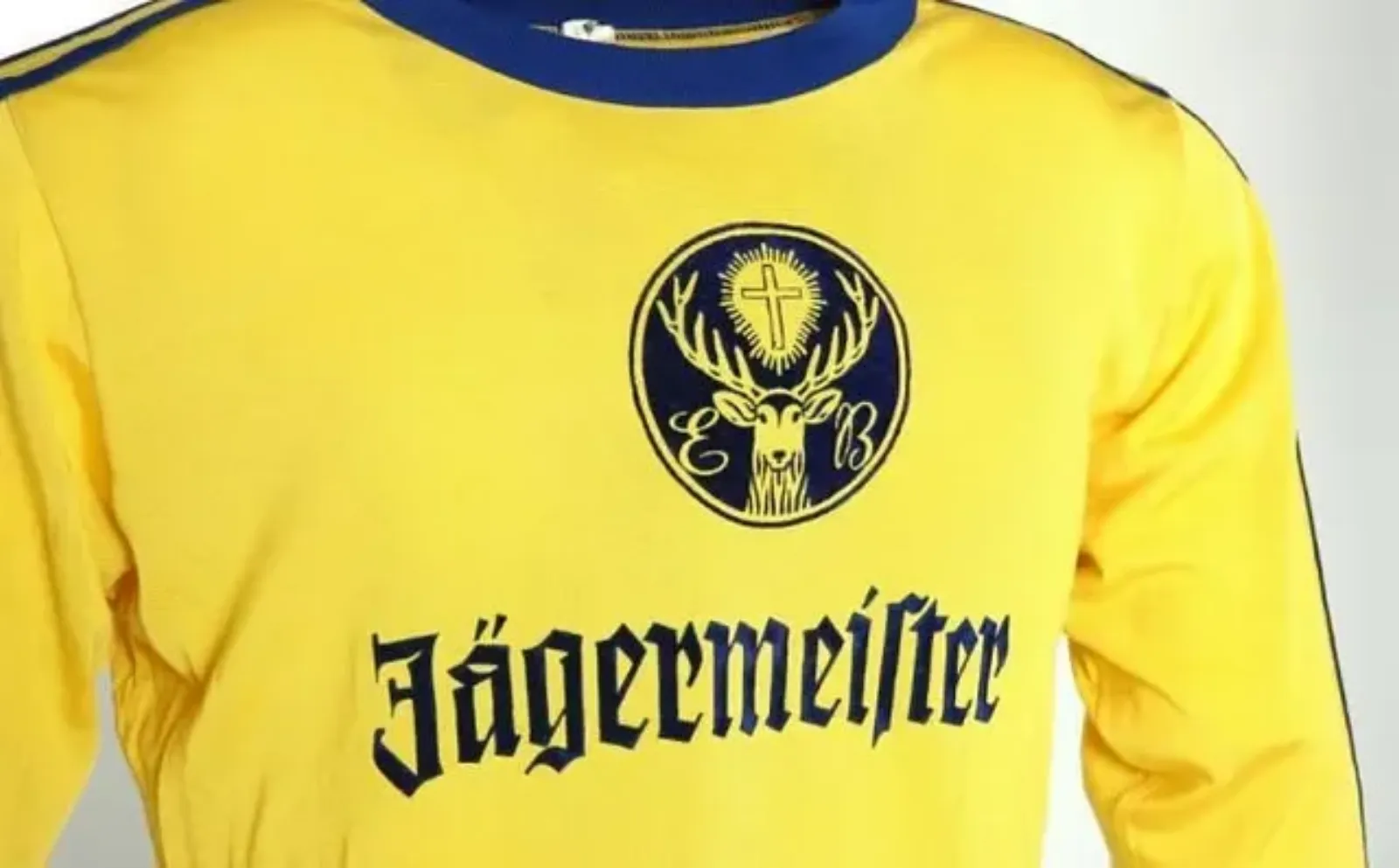
On 24 March 1973, Eintracht Braunschweig walked onto the pitch against Schalke 04 wearing something that had previously been forbidden in the Bundesliga, a commercial symbol on their shirts.
It was the familiar stag’s head of Jägermeister, the German herbal liqueur producer, and its appearance marked a turning point in the relationship between football clubs and commercial brands.
Today, shirt sponsorship is one of the most established revenue streams in professional football, with global corporations paying enormous sums to associate themselves with leading clubs. In the early 1970s, however, the idea of turning a football shirt into advertising space remained controversial in Germany, where the national football authorities were determined to keep commercial logos away from players’ kits.
Press enter or click to view image in full size
What happened in Braunschweig was therefore more than an unusual marketing campaign. It demonstrated that a football club’s identity, visibility and connection with supporters could be transformed into a commercial asset.
A Club That Needed Money and a Company That Needed Attention
By the early 1970s, Eintracht Braunschweig was facing serious financial difficulties. The club had won the Bundesliga title in 1967, but that sporting achievement had not guaranteed long-term financial security, and the search for additional revenue had become increasingly urgent.
At the same time, Günter Mast, the businessman behind Jägermeister, was looking for ways to expand the brand’s visibility beyond its established markets. Football offered something particularly attractive, regular exposure to large stadium crowds, newspaper readers and television audiences.
Mast recognised that the value of sponsoring a football club extended beyond the supporters attending matches. Every photograph, television broadcast and newspaper report could carry the company’s symbol to a much wider audience.
The two sides agreed on a deal worth 500,000 Deutsche Marks over five years, equivalent to 100,000 DM annually. For a financially struggling club, this represented a significant injection of money, while for Jägermeister it offered the possibility of national exposure at a comparatively modest cost.
There was one major obstacle, the German Football Association, the DFB, did not permit commercial shirt advertising.
The Loophole That Changed the Rules
Rather than abandon the idea, Mast and Eintracht developed a solution that challenged the distinction between a club emblem and a commercial logo.
In January 1973, Eintracht’s members voted overwhelmingly to replace the traditional lion on the professional team’s badge with the Hubertus stag, the symbol already associated with Jägermeister.
The vote passed with 145 members in favour, seven against and three abstentions, demonstrating that the club was prepared to make a substantial change to its visual identity in exchange for commercial investment.
The argument was simple, if the stag became an official club emblem, could the DFB still prohibit it as advertising?
The federation initially resisted, and the disagreement developed into a highly publicised dispute over the size and legitimacy of the new badge. Eventually, a compromise allowed Eintracht to display the stag with a diameter of 14 centimetres and the initials EB identifying the club.
On 24 March 1973, the team finally wore the new emblem in a Bundesliga match against Schalke 04, which finished 1-1.
The significance of the occasion extended far beyond the result. For the first time, a Bundesliga club had successfully brought a commercial brand onto its playing shirt, even if it had technically done so through a redesigned club badge.
When Controversy Became Free Advertising
The dispute with the DFB turned out to be one of the most commercially valuable aspects of the entire campaign.
For weeks, German newspapers and broadcasters had followed the disagreement, repeatedly discussing Jägermeister, its stag logo and the businessman challenging football’s established rules.
What began as a sponsorship proposal had become a national marketing story.
The controversy demonstrated an important principle that would later become central to sports marketing: a brand does not necessarily need to purchase every moment of exposure directly if its association with a sporting institution generates public attention.
Mast understood that the argument itself was increasing the visibility of Jägermeister, making the sponsorship more valuable than a conventional advertising placement.
The publicity was so successful that, according to Eintracht’s own historical account, Mast authorised payment of the entire agreed 500,000 DM in May 1973, well before the five-year arrangement had run its course.
For the club, the financial benefit was immediate. For the company, the campaign had achieved something traditional advertising could not easily reproduce: its brand had become part of a national debate about the future of football.
The Bundesliga Opens Its Doors to Sponsors
Eintracht’s success placed increasing pressure on the DFB to reconsider its restrictions.
In October 1973, the federation formally permitted shirt advertising, allowing other Bundesliga clubs to pursue similar commercial arrangements without needing to disguise sponsors as official emblems.
The decision opened a new revenue stream at a time when German football was becoming increasingly professional and commercially competitive.
Other clubs quickly recognised the opportunity, with companies from different industries beginning to appear on shirts. What had initially been treated as an unacceptable intrusion into football’s traditions gradually became a normal part of the sport’s financial structure.
The transformation was not unique to Germany. Commercial advertising had already appeared on football shirts in other countries, including Austria, but the Braunschweig agreement became a defining moment for the Bundesliga and one of the best-known early examples of modern European football sponsorship.
Its importance was not that it invented advertising in football, but that it helped establish the shirt itself as a valuable and legitimate commercial property.
When the Sponsor Became Part of the Club’s Identity
The relationship between Eintracht and Jägermeister eventually went far beyond the original agreement.
The stag remained on the club’s shirts until 1987, creating one of the most recognisable visual associations between a football team and a commercial brand in German football history.
Mast even pursued the possibility of renaming the club Jägermeister Braunschweig, although the DFB rejected the proposal.
That ambition exposed a question that remains relevant today, how much of a football club’s identity should be available for commercial use?
A sponsor might begin by purchasing advertising space, but a sufficiently influential commercial partner can also seek greater visibility through club names, stadium naming rights, colours, merchandise and other elements traditionally associated with supporters’ identity.
In Braunschweig, the financial needs of the club had created an opportunity for a company to become part of its visual identity, raising concerns about where sponsorship ended and commercial influence began.
It was an early illustration of the tension between financial necessity and institutional independence that continues to shape modern football.
From 100,000 Marks to a Global Sponsorship Industry
The original Jägermeister agreement was modest compared with the commercial contracts negotiated by leading football clubs today, but its underlying business model has become enormously influential.
Football shirts now provide companies with exposure across domestic leagues, international competitions, television broadcasts, social media, video games and merchandise sold around the world.
Press enter or click to view image in full size
Sponsors are no longer paying simply to display a logo during ninety minutes of football. They are purchasing access to global audiences, emotional connections with supporters and the credibility associated with established sporting institutions.
For clubs, this has created a source of income that can support player recruitment, infrastructure development and wider commercial operations.
It has also encouraged increasingly sophisticated sponsorship packages, combining shirt branding with digital content, hospitality, regional marketing rights and other commercial activities.
The essential principle, however, remains remarkably similar to the one recognised by Günter Mast in 1973, the attention football attracts has economic value, and businesses are willing to pay to become part of that attention.
The Deal That Changed Football’s Commercial Future
Eintracht Braunschweig did not become a European superpower because of its partnership with Jägermeister, and the agreement did not immediately transform the finances of German football.
Its lasting importance lies elsewhere.
The club and its sponsor challenged an established restriction, demonstrated the commercial potential of football shirts and helped accelerate a change that would eventually become standard throughout the professional game.
The episode also showed that sponsorship was not simply a financial transaction. It could influence a club’s identity, challenge football’s governing institutions and create an entirely new relationship between sport and business.
More than fifty years later, shirt sponsorship is so deeply embedded in professional football that a major club playing without a commercial partner on its shirt can appear unusual.
Yet in March 1973, the sight of a stag replacing a lion was enough to provoke a national controversy.
Eintracht Braunschweig needed money. Jägermeister wanted attention. Together, they helped change how football sold itself to the world.
Related Stories
Jimmy Hill: The Man Who Broke Football's Wage Ceiling
In modern football, players earning hundreds of thousands of pounds a week are part of an industry generating billions through broadcasting, sponsorships and commercial partnerships. Their salaries dominate headlines, influence transfer negotiations and shape the financial strategies of the world's biggest clubs.
· 6 min read

Estadio Centenario: The Stadium Where the World Cup Was Born
On 30 July 1930, thousands of spectators gathered inside a newly constructed stadium in Montevideo to witness an event that would eventually become one of the most important occasions in international sport. Uruguay faced Argentina in the final of the first FIFA World Cup, with the hosts recovering from a half-time deficit to win 4-2 and become football’s inaugural world champions.
· 8 min read
1992: The Birth of the Premier League and the Business That Changed Football
On 15 August 1992, English football entered a new era. Twenty-two clubs began competing in the inaugural Premier League season, launching a competition that would eventually become the most commercially powerful domestic football league in the world.
· 7 min read