
Bosman: The Man Who Changed Football Forever
FBTG | Football Turning Points | Episode 01
By Kiril Yurukov · · 7 min read

Abstract
On 15 December 1995, a relatively unknown Belgian footballer achieved something that generations of celebrated players, influential managers and powerful club executives had never accomplished, he fundamentally changed the rules of European football.
Jean-Marc Bosman was not a superstar, had never commanded an extraordinary transfer fee and was approaching the end of a career that would ultimately be remembered for events far removed from the pitch. Yet his five-year legal battle against the football establishment transformed the relationship between clubs and players, challenged restrictions on European footballers and helped create the modern transfer market.
More than three decades later, his name remains part of football’s everyday vocabulary, appearing whenever a player leaves a club at the end of a contract without a transfer fee. Behind that familiar expression, however, lies a much larger story about employment rights, economic power and the transformation of football into a global industry.
The transfer that never happened
In 1990, Bosman was playing for RFC Liège in Belgium when his contract approached its expiration, and the club offered him a new agreement that would reduce his salary from approximately 120,000 Belgian francs per month to just 30,000.
Bosman rejected the proposal and sought a move to French second-division club Dunkerque, where he hoped to continue his professional career. Although the two clubs had discussed an agreement, Liège withheld the necessary transfer clearance because of concerns about Dunkerque’s ability to meet its financial obligations.
Under the regulations operating at the time, the expiration of a player’s contract did not necessarily mean that he could freely join another club, because the previous employer could still demand financial compensation before permitting the transfer.
For Bosman, this created an extraordinary situation in which his existing contract had ended, his employer was offering substantially reduced wages, and his opportunity to work elsewhere remained subject to a transfer system controlled by football’s governing bodies.
When Liège subsequently suspended him, the dispute became more than a disagreement between a player and his club. It raised a fundamental question: could football’s internal regulations prevent a professional from accepting employment elsewhere after his contract had expired?
Bosman decided to challenge the system in court, beginning a legal struggle that would consume five years of his life.
The ruling that rewrote football’s rules
The decisive moment arrived on 15 December 1995, when the European Court of Justice ruled that the transfer regulations and nationality restrictions at the centre of Bosman’s case were incompatible with the European principle of free movement for workers.
The judgment addressed two important aspects of professional football.
First, clubs could no longer demand a transfer fee simply to release an out-of-contract player moving between clubs in different European Union member states under the rules examined by the Court.
Second, restrictions limiting the number of players from other EU member states who could appear in club matches were found to be discriminatory, undermining UEFA’s existing nationality-based system.
The consequences extended far beyond Bosman’s individual circumstances, because football had effectively been told that its sporting regulations could not override fundamental employment rights established under European law.
It was a turning point in the relationship between professional sport and the wider economy, establishing that footballers were workers entitled to legal protections rather than assets whose movement could remain under the exclusive control of clubs.
When players gained economic power
Before the Bosman ruling, clubs retained considerable influence over a player’s future even after a contract expired, while transfer compensation and restrictions on movement helped preserve a system in which institutional power largely rested with employers.
The judgment changed the economic calculation.
Players approaching the end of their contracts gained a much stronger negotiating position, because clubs now faced the possibility of losing valuable footballers without receiving a transfer fee.
That risk encouraged clubs to protect their investments through longer contracts, earlier renewals and more sophisticated approaches to squad planning, while players and their representatives acquired greater leverage when negotiating salaries, signing bonuses and future opportunities.
For football agents, the development created an increasingly important commercial role, as the ability to negotiate a player’s next contract became more valuable in a market where the transfer fee was no longer always the central financial transaction.
The ruling did not create every feature of today’s transfer economy, nor did it eliminate transfer fees for players under contract. Instead, it helped redistribute bargaining power and accelerated football’s evolution towards a more complex employment market.
The modern free-agent deal, often involving substantial wages, signing bonuses and agent commissions, reflects that transformation.
When a club signs a player without paying another club a transfer fee, the transaction may appear inexpensive on the surface, but the financial value has frequently shifted towards the player’s contract and the intermediaries involved in negotiating it.
Bosman did not remove money from football. He helped change who could claim a greater share of it.
The end of football’s old borders
The nationality element of the ruling was equally significant, particularly for European clubs accustomed to restrictions on how many foreign players could appear in their teams.
UEFA’s previous regulations included the so-called 3+2 rule, which generally permitted three foreign players alongside two additional players who met specific residency and development conditions.
By challenging restrictions affecting citizens of other EU member states, the judgment helped open European club football to a much greater movement of players across national borders.
This development contributed to a profound change in recruitment, squad construction and the internationalisation of Europe’s leading competitions, allowing clubs to assemble teams from a broader European talent market without the same nationality-based barriers.
It also intensified an economic imbalance that remains central to modern football.
Wealthier clubs could compete for a larger pool of established players, while smaller clubs faced growing pressure to develop talent, manage contracts carefully and sell players before they reached free agency.
The internationalisation of squads cannot be attributed to Bosman alone, because television revenue, global scouting, European integration and other regulatory changes were also transforming the sport. Nevertheless, the ruling removed an important legal barrier and accelerated a shift that would reshape the identity of European club football.
The Man Who paid the price
Perhaps the most uncomfortable part of the Bosman story is the contrast between the benefits enjoyed by subsequent generations of footballers and the personal consequences faced by the man who made those benefits possible.
While his case was moving through the courts, Bosman’s playing career suffered badly, and by the time the judgment arrived in 1995, he had lost years that should have represented the prime of his professional life.
He never experienced the enormous financial rewards that later became associated with high-profile free transfers, and his post-football life was marked by serious personal and financial difficulties.
In interviews years after the ruling, Bosman described the sacrifice involved in confronting football’s institutions and acknowledged that he would have preferred someone else to carry the burden.
His story illustrates a difficult reality of structural change, the person who challenges an established system is not necessarily the person who benefits most from its transformation.
The football industry eventually adapted to the new rules, clubs developed new strategies, agents expanded their influence and leading players gained unprecedented opportunities.
Bosman, meanwhile, became famous for a legal victory that had come at the expense of his own career.
The decision that still shapes football
Today, the Bosman ruling is often reduced to a simple explanation of why players can leave clubs on free transfers, but its importance is considerably greater.
It helped establish that football operates within the same fundamental legal and economic framework as other industries, challenged the authority of governing bodies over employment mobility and changed the distribution of negotiating power between clubs and players.
Its legacy is visible whenever a club tries to renew a contract before a player enters his final season, whenever an agent negotiates a substantial signing bonus, or whenever supporters debate whether their team should sell a valuable footballer rather than risk losing him for nothing.
The decision also created new tensions that football has never entirely resolved, particularly around competitive balance, the financial influence of wealthy clubs and the growing importance of intermediaries.
What began as one Belgian footballer’s attempt to continue his career across a national border became a defining moment in the commercial history of European football.
Jean-Marc Bosman never became one of the game’s great players, but he changed the working conditions of thousands who followed him.
And perhaps that is what makes his story so remarkable, football’s modern transfer economy was not transformed by a billionaire owner, a powerful executive or a governing body, but by a player who simply wanted the freedom to choose where he worked.
Related Stories
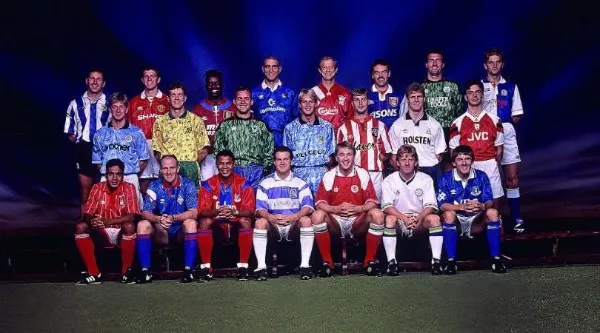
1992: The Birth of the Premier League and the Business That Changed Football
On 15 August 1992, English football entered a new era. Twenty-two clubs began competing in the inaugural Premier League season, launching a competition that would eventually become the most commercially powerful domestic football league in the world.
· 7 min read
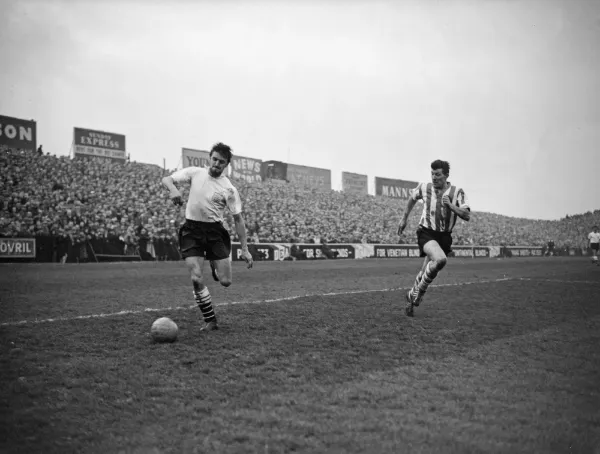
Jimmy Hill: The Man Who Broke Football's Wage Ceiling
In modern football, players earning hundreds of thousands of pounds a week are part of an industry generating billions through broadcasting, sponsorships and commercial partnerships. Their salaries dominate headlines, influence transfer negotiations and shape the financial strategies of the world's biggest clubs.
· 6 min read

Estadio Centenario: The Stadium Where the World Cup Was Born
On 30 July 1930, thousands of spectators gathered inside a newly constructed stadium in Montevideo to witness an event that would eventually become one of the most important occasions in international sport. Uruguay faced Argentina in the final of the first FIFA World Cup, with the hosts recovering from a half-time deficit to win 4-2 and become football’s inaugural world champions.
· 8 min read