
Stadio Luigi Ferraris: 115 Years, Two Rivals and One Football City
FBTG | Stadium Stories | Episode 02
By Kiril Yurukov · · Updated · 5 min read
Abstract
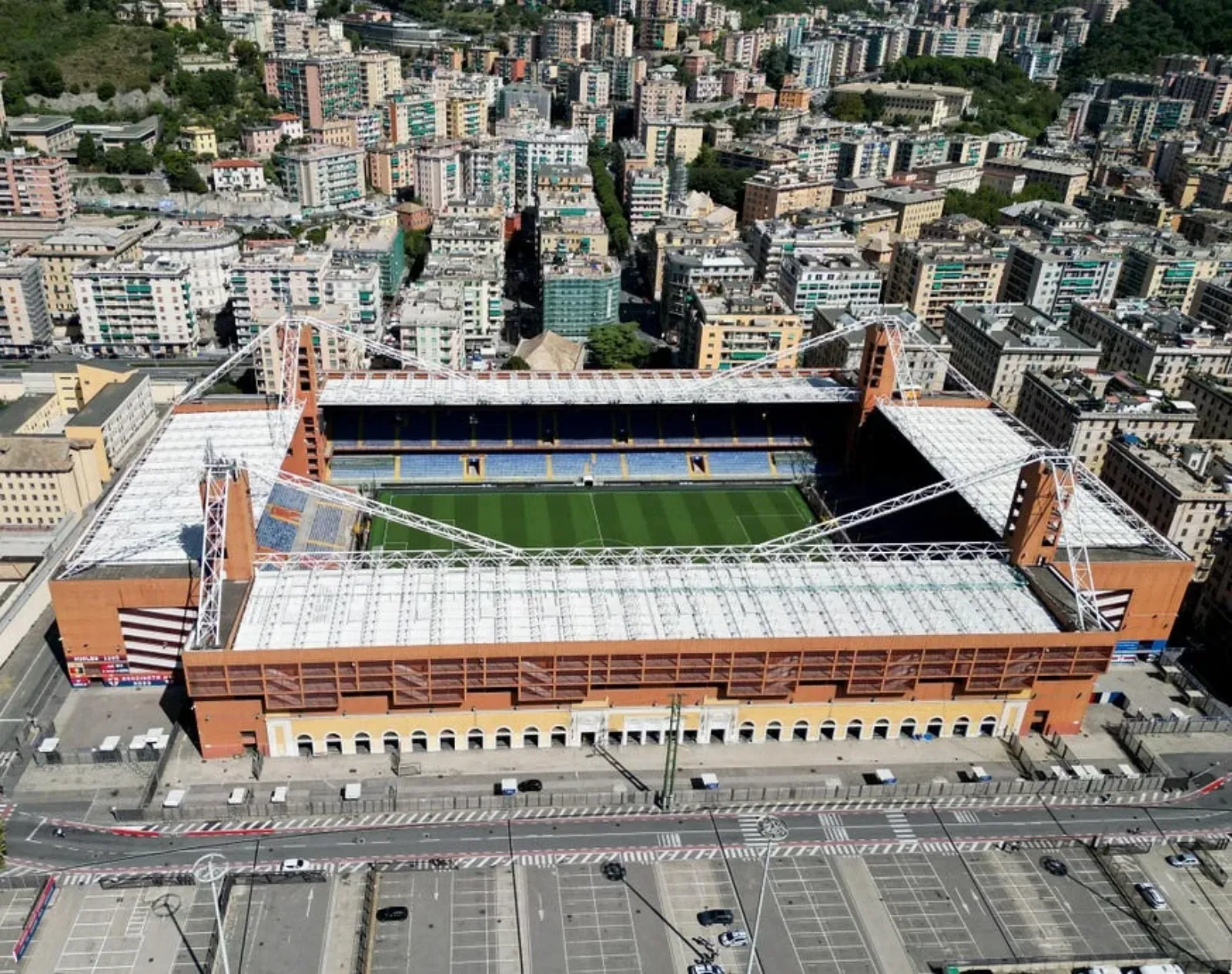
In modern football, stadiums are increasingly designed to maximise commercial revenue, attract international visitors and provide clubs with a competitive financial advantage. Yet in the heart of Genoa, surrounded by apartment buildings and the narrow streets of the Marassi district, stands a stadium whose identity has been shaped by something far more complicated than business.
Stadio Luigi Ferraris has witnessed more than a century of Italian football, hosted two World Cups and served as the shared home of two clubs whose rivalry divides an entire city. Since opening in 1911, it has become one of Italy’s most distinctive football grounds, where history, architecture and local identity remain inseparable.
Its story is particularly unusual because Genoa and Sampdoria share the same stadium without sharing the same footballing identity, turning one building into two completely different homes.

From a horse-racing ground to Italian Football History
The stadium’s origins can be traced to 1910, when Genoa Cricket and Football Club secured land in Marassi belonging to Musso Piantelli, a club member whose property was associated with horse riding and racing.
The new ground officially opened on 22 January 1911 with a match against Inter, although its layout changed almost immediately, with the pitch repositioned and the venue inaugurated again in May of the same year.
This was still an era when Italian football was establishing its foundations, and Genoa had already become one of the country’s pioneering clubs, winning several of the earliest national championships.
As football grew in popularity, the ground expanded beyond its modest beginnings, gradually replacing its early structures with larger stands capable of accommodating increasingly passionate crowds.
In 1933, the stadium was renamed in honour of Luigi Ferraris, a former Genoa player and captain who had died during the First World War. The decision connected the stadium not only to the club’s sporting past, but also to a generation whose lives had been transformed by events far beyond football.
Just one year later, the ground hosted a World Cup match between Spain and Brazil, with Spain winning 3-1 during the 1934 tournament.
The stadium that became home to two rivals
For its first 35 years, the ground was primarily associated with Genoa, but everything changed in 1946 when Sampdoria was formed through the merger of Sampierdarenese and Andrea Doria.
The newly established club began sharing the stadium with Genoa, creating one of European football’s most fascinating arrangements: two fierce city rivals playing their home matches on exactly the same pitch.

Unlike clubs separated by different neighbourhoods or stadiums, Genoa and Sampdoria have developed their identities within the same physical space.
For Genoa supporters, the Gradinata Nord became the symbolic heart of the rossoblù tradition, while Sampdoria’s followers made the Gradinata Sud their own.
The Derby della Lanterna, named after Genoa’s historic lighthouse, consequently became much more than a football match, transforming the stadium into a theatre of competing colours, choreographies and local loyalties.
What makes the rivalry especially remarkable is that neither club can claim the building as an entirely separate home. Each inherits the same stands, entrances and pitch, yet fills them with a completely different emotional meaning.
World Cups, reconstruction and an English-Style Stadium
Luigi Ferraris has experienced several major transformations, but none was more dramatic than the redevelopment undertaken ahead of the 1990 World Cup.
Between 1987 and 1989, the stadium was substantially rebuilt to designs associated with architect Vittorio Gregotti, replacing much of the previous structure while preserving its location in the densely populated Marassi neighbourhood.
The resulting design was strikingly different from many traditional Italian stadiums, featuring four prominent corner towers, steep stands close to the pitch and a compact architectural form that recalled the atmosphere of English football grounds.
During Italia ’90, Genoa hosted four matches, including the dramatic round-of-16 encounter between the Republic of Ireland and Romania, which Ireland won on penalties.
The reconstruction also demonstrated an important principle that remains relevant to stadium development today, a football ground can be modernised without necessarily abandoning the urban environment in which its history was created.
Rather than moving Genoa’s football identity to an entirely new location, the project attempted to preserve the stadium’s relationship with its surrounding community.
When football filled every corner
Before modern safety regulations and seating arrangements transformed stadium capacities, Luigi Ferraris regularly accommodated crowds far larger than those possible today.
One of its most celebrated attendance records came during the Genoa–Sampdoria derby in November 1982, when more than 57,000 spectators were recorded at the stadium.
The scale of those crowds reflected a period when football grounds were designed around standing terraces and mass attendance rather than the premium seating, hospitality facilities and commercial infrastructure that increasingly define modern stadium economics.
Yet the Ferraris has retained something that cannot easily be recreated through investment, the sense of pressure created by steep stands, passionate supporters and a stadium embedded within the surrounding city.
Its atmosphere is not simply a product of architectural design, but the accumulated result of generations of supporters who have turned the same physical structure into a symbol of two competing football cultures.

The economic challenge of preserving history
The future of Luigi Ferraris raises a question facing many historic European football clubs, how can a stadium preserve its identity while meeting the financial demands of the modern game?
New stadiums increasingly generate revenue through premium hospitality, commercial partnerships, entertainment events and facilities designed to operate throughout the year.
Older venues, particularly those surrounded by established residential neighbourhoods, often face greater limitations when attempting to introduce those revenue streams.
For Genoa and Sampdoria, the challenge is even more complex because redevelopment must accommodate two clubs with different sporting ambitions, financial circumstances and supporter identities.
Modernisation offers opportunities to improve accessibility, safety, spectator comfort and commercial performance, but the decisions surrounding the Ferraris also carry cultural consequences.
A stadium that has served its city for more than a century cannot be evaluated solely as a piece of real estate, because its value extends into the collective memory of the communities surrounding it.
One stadium, two identities
The story of Luigi Ferraris is ultimately about the relationship between football and the cities that give clubs their meaning.
Since 1911, the stadium has survived wars, political upheaval, changing ownership structures, major reconstruction and the transformation of Italian football into an international business.
It has hosted World Cup matches, witnessed extraordinary crowds and provided a stage for one of the country’s most emotional local rivalries.
But its greatest distinction is perhaps the simplest: the same stadium can belong emotionally to two clubs whose supporters see themselves as fundamentally different.
For Genoa, it is the home of the Grifone. For Sampdoria, it is the home of the Blucerchiati. For the city, it is Marassi.
And after 115 years, Luigi Ferraris remains a reminder that a football stadium is not defined only by who owns it, how much revenue it generates or how modern its facilities become, but by the generations of people who give it meaning.
Related Stories
Estadio Centenario: The Stadium Where the World Cup Was Born
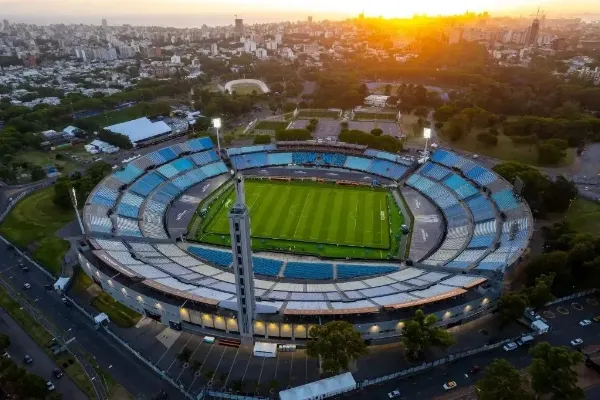
On 30 July 1930, thousands of spectators gathered inside a newly constructed stadium in Montevideo to witness an event that would eventually become one of the most important occasions in international sport. Uruguay faced Argentina in the final of the first FIFA World Cup, with the hosts recovering from a half-time deficit to win 4-2 and become football’s inaugural world champions.
· 8 min read
El Molinón: Spain’s Oldest Football Ground and the City That Never Left It
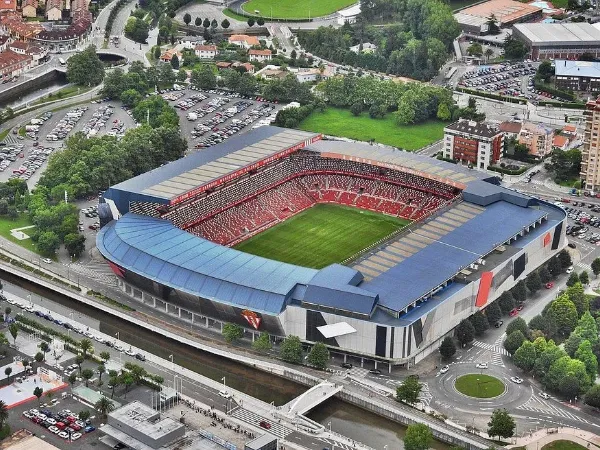
Long before the Santiago Bernabéu became a global football landmark and Camp Nou emerged as one of Europe’s most recognisable stadiums, football was already being played on a modest field beside a river in the northern Spanish city of Gijón.
· 6 min read
Turf Moor: 143 Years of Football, History and Working-Class Identity
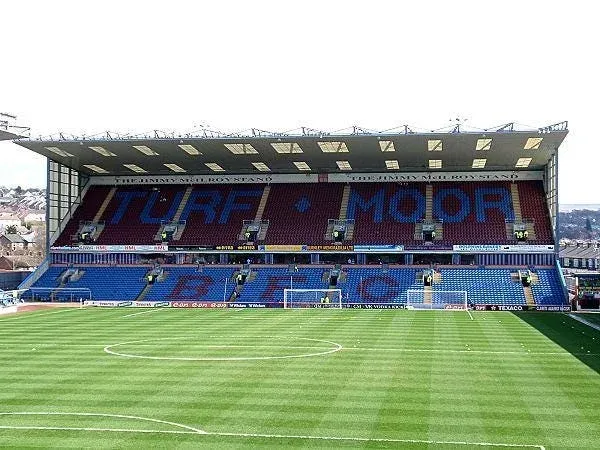
In an era when football clubs are investing hundreds of millions in futuristic stadiums, luxury hospitality and commercial entertainment complexes, one of English football’s most remarkable venues continues to stand in the heart of a former industrial town in Lancashire.
· 5 min read